Thought of the day

"No problem can be solved from the same level of consciousness that created it". –Albert Einstein

Thursday, 14 May 2015

Ethical Leadership : A ray of hope for the organisational growth & development

Ethical Leadership is leading by knowing and doing what is right. If leaders are ethical, they can ensure that ethical practices are carried out throughout the organization.
1. Ethical leaders respect others
Immanuel Kant argues that it is our duty to treat others with respect. One should treat others as ends in itself and never as means to an end.
Beauchamp and Bowie (1988) pointed out that "Persons must be treated as having their autonomously established goals and must never be treated purely as the means to another person's goals."
  • Leaders who respect also allow others to be themselves. They approach others with a sense of unconditional worth and value individual differences (Kitchener, 1984)
  • Respect means giving credence to others' ideas and confirming them as human beings.
  • A leader should nurture followers in becoming aware of their own needs, values, and purposes.
  • Respect means that a leader listens closely to their subordinates, is empathetic, and tolerant to opposing views.
  • When a leader exhibits respect, subordinates feel competent about their work.
2. Ethical leaders serve others
  • This is based on the concern for others (Ethical egoism)
  • This is an example of altruism.
  • An example of this is observed in mentoring, empowerment, behaviors, and team building.
  • Very similar concept to the "Beneficence" that is taught to health professionals.
  • Senge contended that one of the important tasks of leaders in learning organizations is to be a steward (servant) of the vision within the organization and highlights the importance of not being self-centered, but integrating one's self or vision with the vision of the organization.
3. Ethical leaders are Just
  • Justice demands that leaders place the issue of just at the center of their decision making.
  • No one should be treated differently unless their particular situation demands it and if that is the case, then the rules for differential treatment should be made clear.
  • Good coaches are those who never have favorites and those who make a point of playing everyone in the team.
  • The golden rule (Rawls, 1971) is to "Do unto others as you would have them do unto you."
  • The principles of distributive justice includes:i. To each person, and equal share.ii. According to individual needs iii. According to that person's rights iv. According to individual efforts v. According to societal contribution vi. According to merit.
4. Ethical leaders are honest
  • Being honest is not just about telling the truth. It has to do with being open with others, representing reality as fully and a completely as possible.
  • There are times of course where telling the complete truth can be destructive and counter productive. The challenge is to strike a balance.
  • It is important for leaders to be authentic, but sensitive to the attitudes And feelings of others.
  • Dala Costa (1998) made a point in the Ethical Imperative book. "Do not promise what you can't deliver, do not misrepresent, do not hide behind spin-doctored evasions, do not suppress obligations, do not evade accountability, do not accept the 'survival of the fittest' pressures.
5. Ethical leaders build community
  • Leadership is often defined as the "process of influencing others to reach a common or communal goal." This definition has a clear ethical dimension. The common goal implies that leaders and followers agree on the directions of the group.
  • Authentic transformation means that a leader cannot impose their will on other. They need to search for goals that are compatible with everyone.
  • Ethical leadership demands attention to civic virtue (Rost, 1991). This means that both leaders and followers need to attend to community goals and not just their mutually determined goals.
Maybe the most important thing is to realize that leadership involves values; one cannot be a leader without being aware of and concerned about one’s own values. We can say also that rather than telling people what to do, we should tell them what to be and help them to become more virtuous.
Contributed by Mr. Khagendra Nath Gangai 
Assistant Professor- HR/OB,  BULMIM, New Delhi  

Saturday, 9 May 2015

How To Make ‘Work Life Balance’, Work For Your Business?

“Harmony makes small things grow; lack of it makes great things decay.” ~Sallust

You will always have that one more email that needs to be replied to. That one phone call that will always get prioritized over dinner with the family. That one Sunday client meet for which you just rescheduled your family outing. More and more people today, struggle to achieve an acceptable balance between work and family life.
Let’s face it it’s not always easy to make a living doing something you love.
The first challenge is to figure out what that is, and it’s often complicated by what we think we should do based on what other people think and what we’ve done up until now.
A disharmonised employee is as such of a threat as an unacquainted one. With the recent German wings plane crash in the French Alps on March 24, 2015 brought the reality of mental illness in the workplace to the attention of employers all over the world. Over the last 20 years, workplace health initiatives around the world have been growing as employers have started understanding that better employee health leads to reduced absenteeism and better employee productivity. These initiatives mainly address physical health of employees but initiatives to address mental health and work stress are still in budding stages.
It’s shocking that despite all this, only 38% of Indian employers identified stress management at workplace as a top priority of their health and productivity programmes. Research proves that the main cause of suicide in working class in stress at the workplace. It’s high time that you as an establishment take responsibility for work your employees’ life. Helping employees achieve balance and harmony in their lives is equally beneficial both for you!
We steer you through simple steps you can incorporate towards a happier and hence more productive work life.

1. Prioritize
Help your employees prioritize. Deadlines are good but they are often taken with a pinch of salt. You must have faith in their decisions. Allow them flexi hours, work from homes, webinars. All to make sure the family isn’t left behind.
After all a happy family is the backbone to a happy employee.

2. Spread the word!
Share experiences, ideas, stories…talk. It has proven to not only relive stress but also enhance creativity and productivity. As employers to hundreds its important to systematize regular informal cluster meeting into your standard operating procedure. Let people discuss and vent out!

3. Help them look forward
Organisations are increasing giving “An Hour Off Work” to let employees do what they love the most. It could be a small chit-chat hour or an hour toindulge themselves into s shopping or simply finish off that last chapter of the book. It doesn't necessarily need to be time consuming or tiring!

4. Respect Private Time
An email or two after working hours won’t hurt but there is a reason why its called “working hours”, If there is something extremely urgent, it’s always a good idea to simply add “I am sorry to bother you at this hour.” Your employee will only feel all the more preferential and appreciated by this gesture.

5. Freedom to Express
Tell your boss, family, friends, colleagues, and anyone. Tell them what your plan is, and ask them to respect it.

6. Exercise
It may feel counter intuitive to add another activity to your life, but exercise relieves stress, clears your mind, and ultimately makes you more productive. Don't skip it. You'll find that you greet work, family, and personal commitments with renewed liveliness.
Contributed by Shreya Krishnan 
PGDM-Batch 2014-2016

Wednesday, 29 April 2015

TOP 5 INTERVIEW QUESTIONS

  1. Tell something about yourself?
  2. Why you would like to join this company?
  3. Why did you select this field?
  4. Did you ever face any difficulty in your job?
  5. Why should we hire you?

Sunday, 26 April 2015

A special lecture on "Employee Engagement : Harnessing human capital for better performance",on 15th April,2015

The human resource is an integral part of any business unit. It is like a capital or assets of the organization. Any business functions, whether it is an operation & supply chain management, marketing management, financial management, or information technology management without human resources, we cannot achieve our business and organizational objectives.  In short, we can say that without human aspects not even single function will not possible to achieve organizational goals in the workplace. But we have always mentioned it in our balance sheet as part of liability side and most of the time we have neglected the human aspects. Most of the organizations, employer tries to exploit their employees and as they called human resources is not to be considered as an asset. The question is here that what are assets?  You will agree with me that assets are “any things that the creation of our wealth”.  For example, if you have lands, properties, infrastructures, technologies, etc., these are considered to be assets which multiple creation of wealth for you. Similarly, human resources create wealth for the organization.  If you look around in your organization anything’s that comes to your eyes that has been created by human beings and even technological advancement is also created by human beings. Therefore, we can say that human resources are assets or capital for the organization, if you select the employees having the right attitude, the right skills, and mange these talents in an effective manner.  


The objectives of the human resources management is to maximum utilization of human resources  and enhance better performance of employees, which further leads to profit, growth and productivity for the organization. Employer’s always expected from their employees to do more in comparison what they provide in terms of compensation and benefits in exchange for their employment and contract work. On the other hand employees expected from their employer’s to give best compensations and benefits, to develop the human resources through training and development, treat them as human beings and established relationship to seek better cooperation with each other, to fulfill their basic, psychological and social needs, in exchange for what they are doing in terms of their nature of duties, work and responsibility. Therefore, it has been observed that when a mismatch between these expectations and needs  of the employees and employer’s generate conflict, politics, dissatisfaction in job, high attrition, low work motivation, absenteeism, lack organizational  commitment, disengaged, lack of job involvement  lack of organizational citizenship behavior in the organization which directly impact on organizational performance. As a result, employees start intentionally doing poorly in their performance.
Today’s generation employees have different needs and expectations and it changes very rapidly. Therefore, human resource practitioners always look for various alternatives and suggest to the employer’s for better organizational performance. In management research, there are several strategies are available, but employee engagement is one of the variables  that it is very important factors to find solution for several problems, especially better performance of the employees. 
Contributed  by Mr. Khagendra Nath Gangai. 
Assistant  Professor-HR & OB, BULMIM


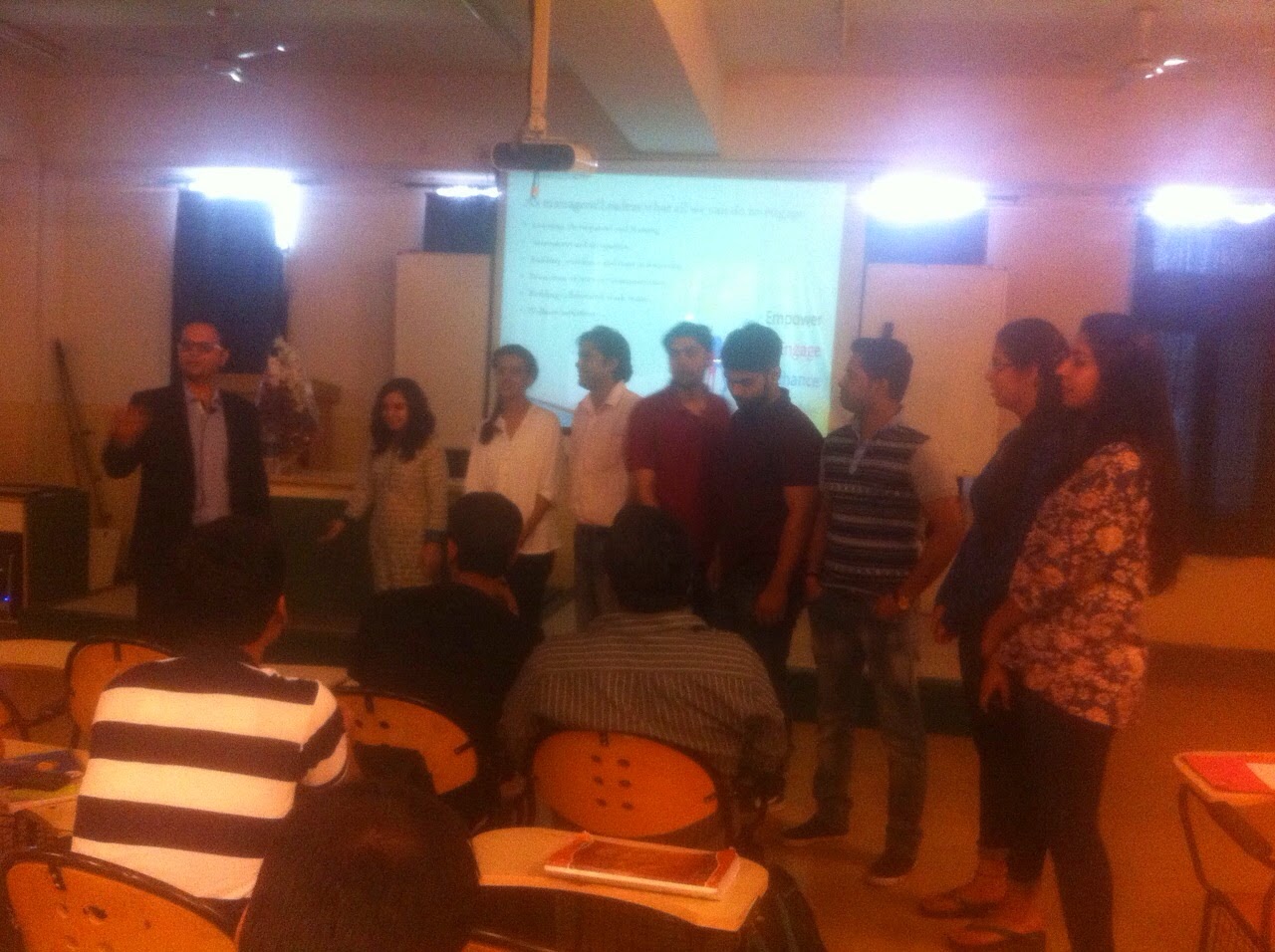
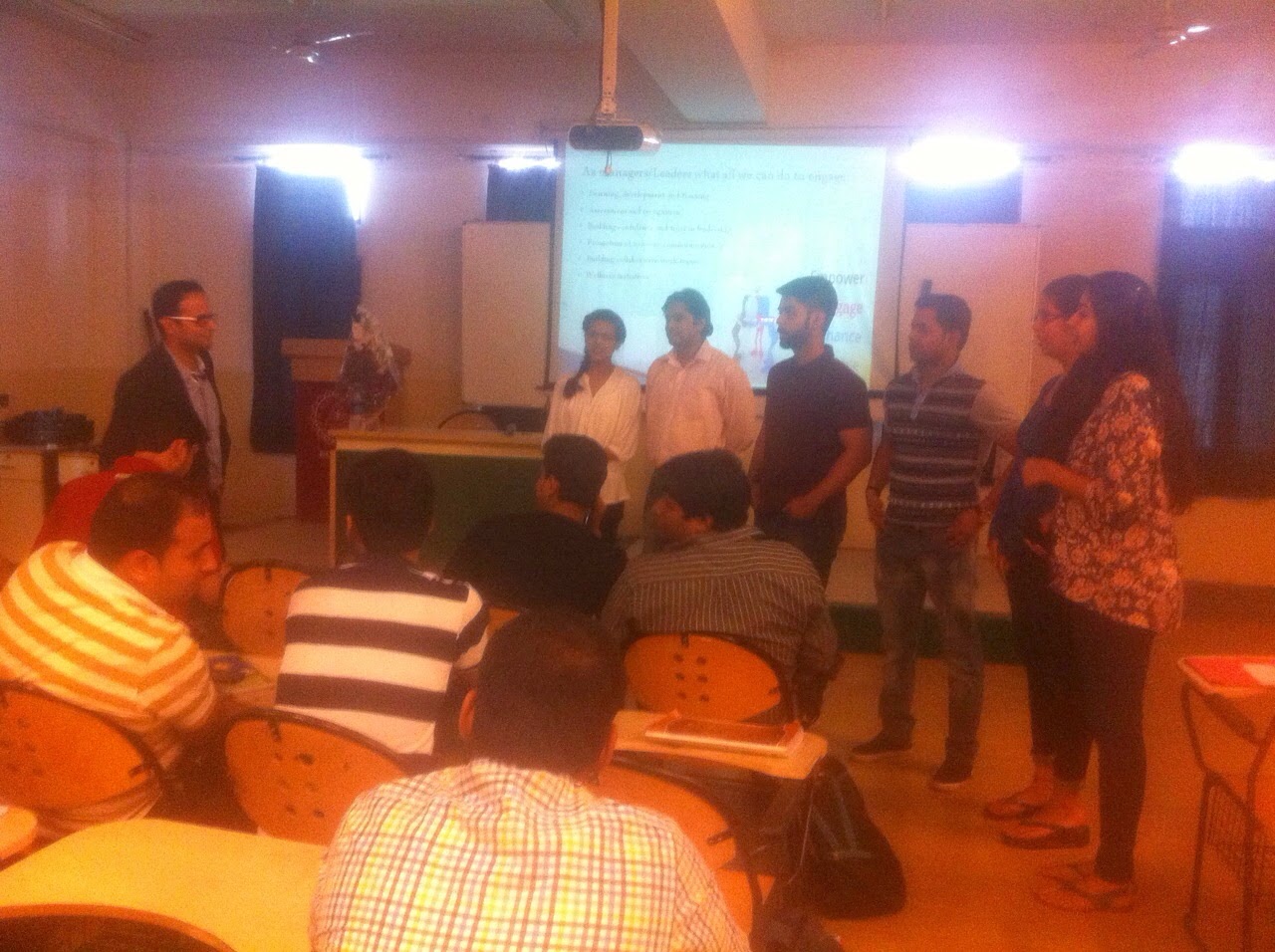
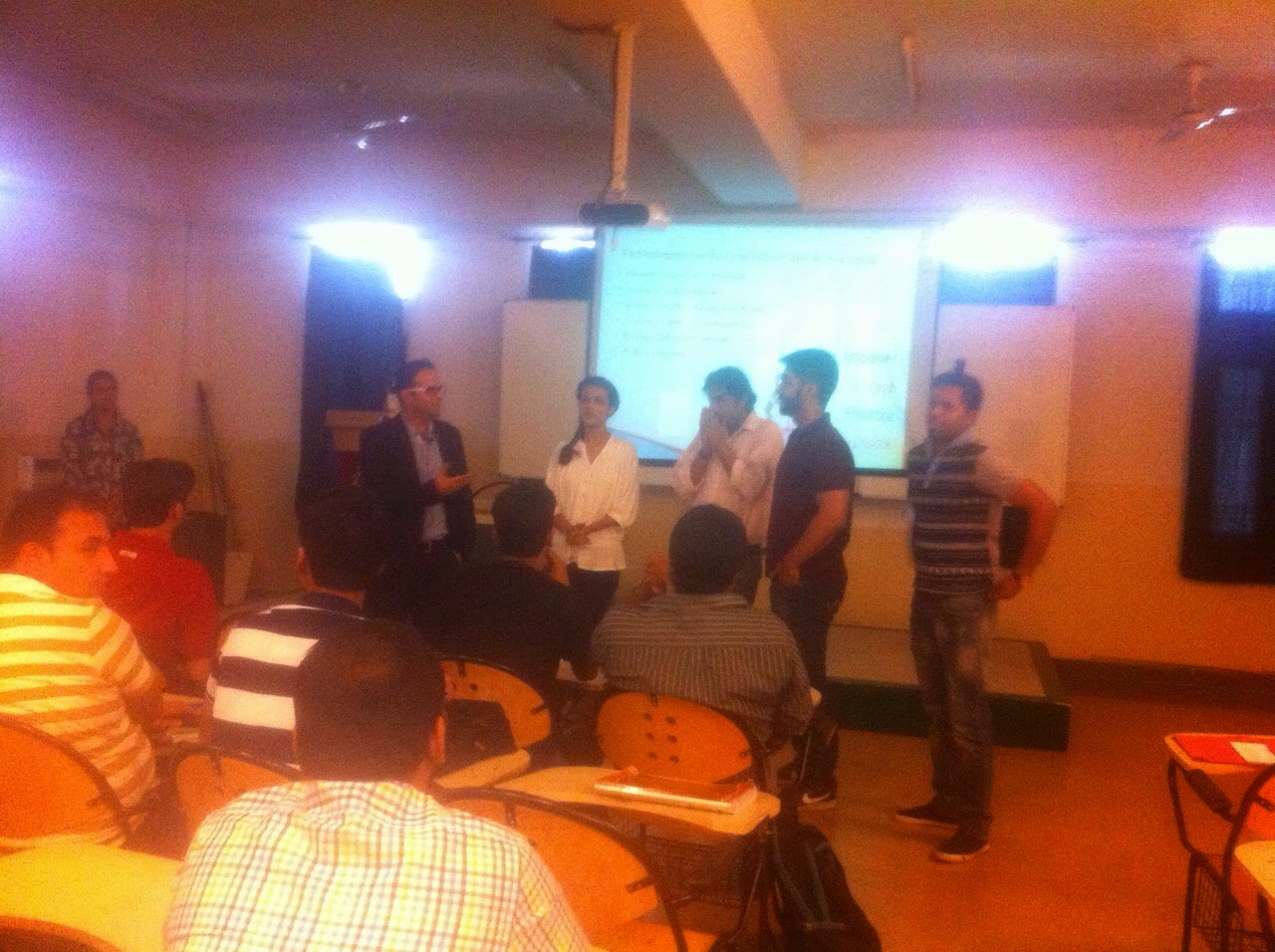
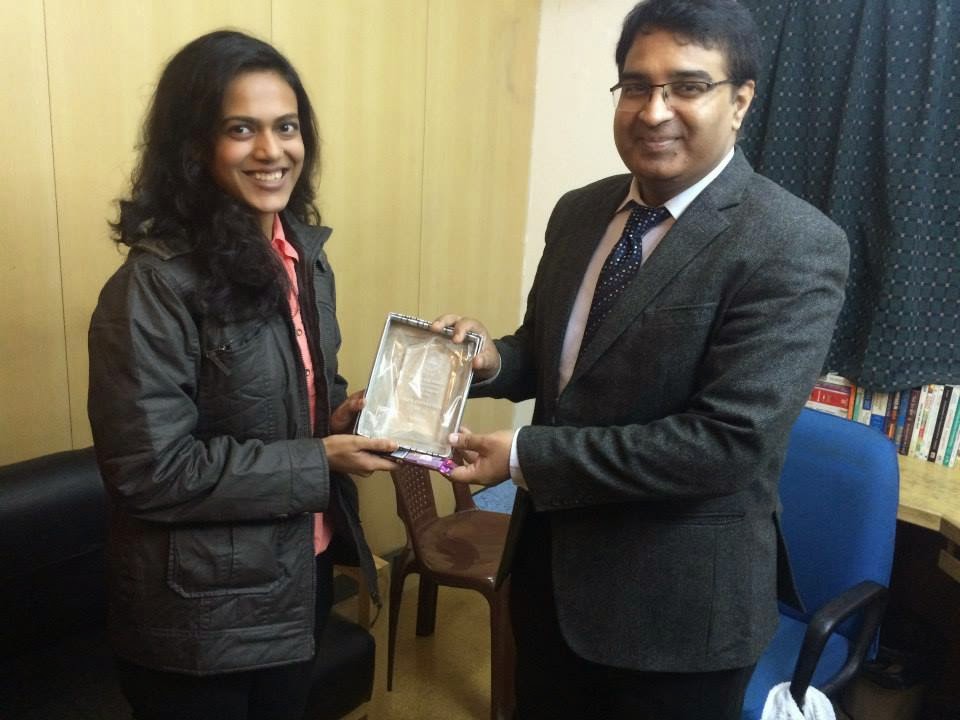
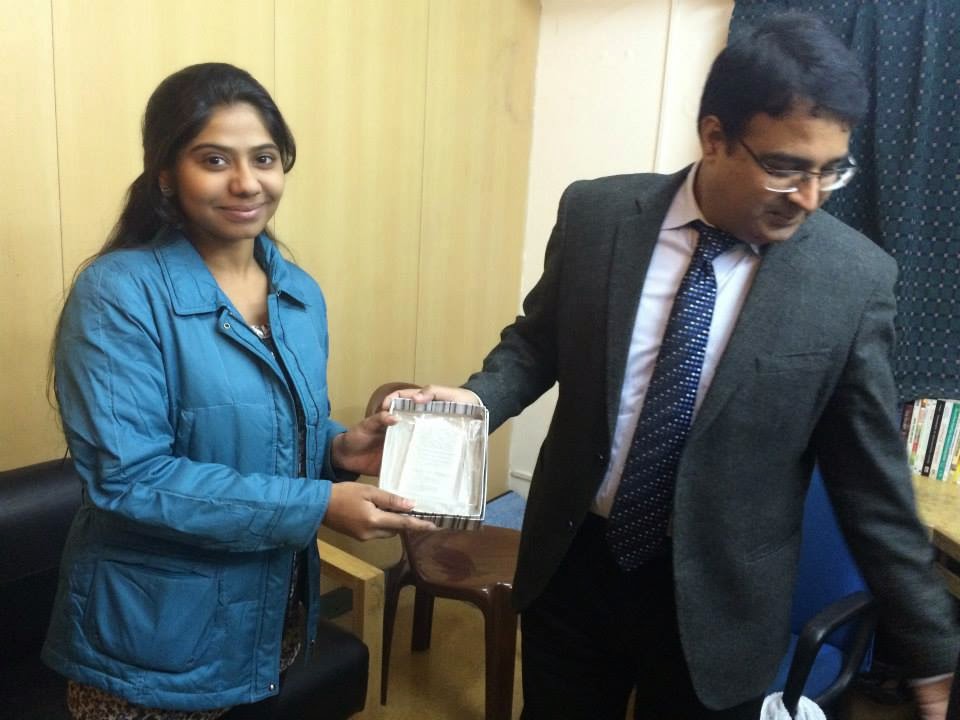
Crew Convention Winners

Crew Convention is an experiential learning activities of HR Club initiative. The objectives of the activity was team building, creativity,innovation, trust,confident,and group choeshivenss among  students year(  2014-2016)  of  BULMIM.


Tuesday, 9 December 2014

About HR Club

Preamble: The core ideology behind setting up subject-wise clubs in BULMIM is to cultivate interest in the subject of  HR as an academic discipline as well as promote it as a career option of choice within the student community at BULMIM. This will also aim at providing a platform to increase the visibility of BULMIM among the professional communities and recruiters. Its principal goal would be to supplement the pedagogical BULMIM experience and the BULMIM campus recruitment initiatives to prepare its members for successful careers. The club would be fostering an environment of continuous learning and discovery of recent trends and developments within the field that helps students to translate their theoretical knowledge into practice. The club may be run by students and selected faculty members can work as facilitators / advisors. The names of clubs and their activities need to be highlighted on BULMIM’s web site for image building.

Club Activities:

1. Arranging for discussions on contemporary topics on the subject once in a month or more frequently. This will help in providing supplementary knowledge to students beyond the course curriculum (e.g. Pre-budget Expectations and post Budget Analysis).
2. Inviting distinguished practitioners to share their experience with students preparing them to face on the job situations and requirements. This will provide students with practical insight
3. Conducting career development programs such as pre-placement lectures, mock interviews, interview question guide, group discussions, resume interviews, career counseling etc.
4. Helping in networking with working professionals, alumni working in the field
5 Conducting visits to reputed organizations to meet their top management professionals for interaction..
6. Publishing a quarterly newsletter on behalf of the club. Publishing a Knowledge Series on important topics in the subject  for students use.
7. Encouraging students to conduct small research studies and publish them.
8. Preparing students for various outside competitions on behalf of BULMIM.
9. Conducting workshops and demonstrations of software / analytics being used by industry in practice on the subject concerned.
10. Conducting a brief social get together on behalf of the club, once a year.
11. Display Job opportunities to our present  students and  Alumni of BULMIM.

Faculty Coordinator: Prof.(Dr.) Arun Tyagi, Prof. Sadhvi Pandey and Prof. Khagendra Nath Gangai
Students Coordinators : Batch-2014-2016 -
                                     Batch-2015-2017-